Mexico Travel Diary Cancun: Chichen Itza, Playa Delfines & My Final Days in Mexico
Sep 4, 2018
12 min read
My final days in Mexico felt like a soft transition between two very different worlds.
After the intensity of Mexico City — the ancient ruins of Teotihuacan, the food, the architecture, the history, and the constant movement — I flew to Cancun for the last chapter of my Mexico journey.
At first, Cancun felt like the “beach ending” of the trip. But it became more than that. It became a mix of ancient Maya ruins, tropical air, local streets, unexpected crocodile sightings, a peaceful afternoon at Playa Delfines, and one unforgettable day trip to Chichen Itza.
It was also my final stop before flying onward to Havana, Cuba. Maybe that is why every moment felt a little more temporary. I knew Mexico was almost over, but I also knew another country was waiting.
This story is not a perfect luxury beach escape. It is a memory of movement, early mornings, simple decisions, budget travel choices, and the quiet feeling of closing one journey before beginning another.
About Cancun and Chichen Itza
Cancun is one of Mexico’s most famous Caribbean destinations, known for turquoise beaches, nightlife, resorts, day trips, and easy access to some of the Yucatan Peninsula’s most important cultural sites.
For many first-time visitors, Cancun is more than a beach city. It can also be a practical base for visiting Chichen Itza, cenotes, Isla Mujeres, Playa del Carmen, Tulum, and other places in the Riviera Maya and Yucatan region.
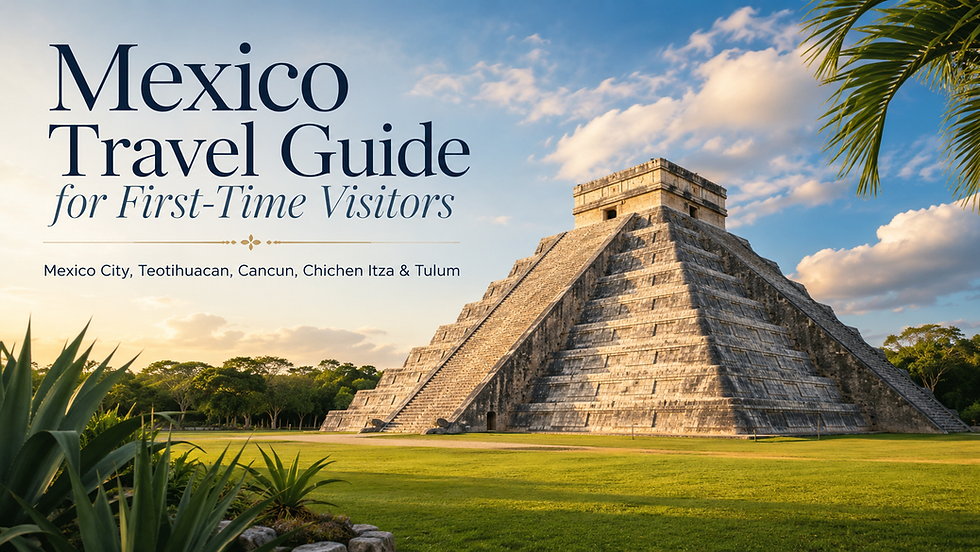
Chichen Itza is one of Mexico’s most famous archaeological sites and one of the most recognized ancient Maya cities in the world. Its most iconic structure is El Castillo, also called the Temple of Kukulcan, but the site also includes the Great Ball Court, the Temple of the Warriors, columns, carvings, and sacred spaces that show how advanced Maya architecture, astronomy, and ceremonial life were.
Playa Delfines is one of Cancun’s most scenic public beaches. It is famous for its wide Caribbean view, bright blue water, open shoreline, and relaxed atmosphere compared with some of the busier hotel zone beaches.
Cancun’s general travel vibe is tropical, convenient, tourist-friendly, energetic, and easy to enjoy even on a short stay. It can feel polished in the hotel zone, local in the downtown areas, and deeply historical once you leave the city for places like Chichen Itza.
Arriving in Cancun After Mexico City
I arrived in Cancun on March 31, 2023, after flying from Mexico City. The flight landed at around 9:10 p.m., and the first thing I noticed was the warm tropical air.
It felt completely different from Mexico City.
Mexico City had felt big, layered, historic, and constantly moving. Cancun felt warmer, softer, and more humid. Even arriving at night, I could already sense that I had entered a different side of Mexico.
I had pre-booked my airport transfer, which made arrival easier. For a late-night landing, especially in a new destination, I prefer having at least the first transfer arranged. It removes one layer of stress when you are tired, carrying luggage, and still trying to understand a new place.
Soon, I arrived at my hotel. It was not a luxury resort, but it was practical. The location worked well for what I needed: close enough to local restaurants, convenient for my tour pickup, and simple enough for a budget-conscious traveler.
The next day, I discovered something unexpected near the hotel — a lake behind the property with crocodiles moving through the water.

It was one of those travel moments that makes you pause.
You think you are just staying in a regular hotel near the city, then suddenly there is a crocodile quietly gliding through the water behind it. Cancun had already started surprising me.
Why I Chose a Hotel Near My Tour Pickup Point
One lesson I keep learning as a traveler is this: where you stay matters, not only for comfort, but for logistics.
When I booked my Cancun hotel, I considered the pickup point for my Chichen Itza tour. Because the tour would start very early, I did not want to wake up before sunrise and then worry about transportation across the city.
For budget travelers, especially first-time international travelers, a hotel does not always need to be fancy. Sometimes the better choice is the hotel that saves time, stress, and extra transport costs.
That was my mindset in Cancun.
I wanted something practical. Somewhere I could sleep, walk to the pickup point, eat nearby, and prepare for the next day without overcomplicating the trip.
“Before booking accommodation for a tour-heavy trip, I always check the pickup point first. A cheaper hotel far from the pickup area can become stressful when the tour starts before sunrise.”
Waking Up Early for Chichen Itza
On April 1, I woke up at 4:30 a.m.
The sky was still dark. The city felt quiet. Most people were still asleep, but I was already getting ready for one of the most anticipated parts of my Mexico trip: Chichen Itza.
There is something special about waking up early for a destination you have only seen in photos, books, and travel videos. You are sleepy, but your mind is already awake. You know the day will be long, but you also know it might become one of the memories you keep for years.
I walked to the tour pickup point from my hotel and joined the other travelers. Everyone had that quiet early-morning energy — half asleep, half excited.
The road to Chichen Itza was long, but I did not mind. The thought of finally seeing one of the world’s most famous ancient sites kept me alert.
For me, Chichen Itza was not just another tourist stop. As someone who loves architecture, history, and old civilizations, I was curious to see how this ancient city was designed, how it worked, and why it still attracts travelers from all over the world.
Reaching Chichen Itza
When we reached the site, the first thing I noticed was the crowd.
Chichen Itza is famous, and you feel that immediately. Tour buses, guides, visitors, vendors, voices, movement — everything reminded me that this was not a hidden ruin in the jungle. This was one of
Mexico’s most visited historical landmarks.
After a quick restroom break, we joined the line to enter the archaeological complex.
Inside, local vendors displayed colorful fabrics, souvenirs, crafts, and artwork. The energy was busy, sometimes overwhelming, but also very alive. It reminded me that major historical sites are not frozen in time. They continue to exist in the present — with tourism, local livelihoods, stories, and people moving around them every day.
Then, finally, El Castillo appeared.
The pyramid stood in the open space, strong and symmetrical under the bright sun. Even with the crowd around it, it had presence. It looked familiar because I had seen it so many times in photos, but seeing it in person felt different.
Photos show the structure.
Being there lets you feel the scale.

Understanding Chichen Itza Beyond the Photos
Chichen Itza is often introduced as one of the New Seven Wonders of the World, but standing there made me realize that its real power is not only in that title.
Its power is in how much knowledge was built into stone.
El Castillo, also known as the Temple of Kukulcan, is not just a pyramid made to impress. It reflects the Maya civilization’s understanding of astronomy, time, ritual, and design. The structure is often connected to calendars, seasonal changes, and the movement of light and shadow.
Around the main pyramid, the archaeological site includes other important structures such as the Great Ball Court and the Temple of the Warriors. Each area adds another layer to the story of Chichen Itza.
The Great Ball Court especially made me imagine the ceremonial life of the ancient city. It was not just a game space in the modern sense. It was tied to ritual, symbolism, power, and belief.
The Temple of the Warriors, with its columns and carvings, gave the site even more depth. Every structure seemed to remind visitors that this was not only a monument. It was a city with systems, beliefs, ceremonies, and knowledge.
As I walked through the site, I kept thinking about how ancient builders were able to create something so precise and meaningful without the modern tools we rely on today.
That is what impressed me the most.
Not only the size.
Not only the fame.
But the intelligence behind it.
What My Guide Helped Me See Differently
Before visiting Chichen Itza, I had the usual image in my head — ancient pyramids, sacrifices, dramatic stories, mystery, and stone temples under the sun.
But our guide helped me see the site with more balance.
He spoke about the Maya connection to nature, agriculture, astronomy, and especially corn. Instead of presenting the civilization only through violence or sacrifice, he explained how much of their life was connected to observation, timing, harvest, and the natural world.
That changed how I looked at the pyramid.
It was not only a dramatic monument. It was also a tool of understanding. A way of reading the seasons. A structure connected to the sky, the sun, shadows, and cycles.
One detail that fascinated me was the acoustic effect near the pyramid. When people clap near certain parts of the structure, the echo is said to resemble the sound of a quetzal bird. Whether you hear it clearly or not, the idea itself is fascinating — that architecture can interact with sound in such a memorable way.
As an architecture-minded traveler, I found that deeply interesting.
Chichen Itza made me think about buildings differently. It reminded me that architecture is not only about shelter or beauty. Sometimes it is also about belief, science, ritual, memory, and the way humans try to understand their place in the universe.
The Heat, the Crowds and the Reality of Visiting Chichen Itza
As beautiful and impressive as Chichen Itza was, it was also hot and crowded.
This is something I think first-time visitors should expect.
Famous places are famous for a reason, but that also means you will rarely have them to yourself. There will be tour groups, people taking photos, vendors, guides, and movement everywhere.
For me, that did not ruin the experience. It just made the visit feel real.
Travel is not always quiet cinematic moments. Sometimes it is heat, dust, lines, people around you, and trying to listen to your guide while looking for shade.
If you visit Chichen Itza from Cancun, prepare for a long day. Bring water, wear comfortable clothes, use sun protection, and manage your expectations. It is worth visiting, but it is not a quick casual stop.
“Ancient sites are easier to enjoy when you prepare for the practical side too — heat, water, walking, timing, and staying connected enough to find your pickup point after the tour.”
Back to Cancun After Chichen Itza
After the Chichen Itza tour, returning to Cancun felt like coming back from another world.
One part of the day had been ancient stone, history, and hot open spaces. The other part was traffic, restaurants, hotels, and tropical city life.
That contrast is one of the things I liked about Cancun. It can be a beach destination, but it can also be a base for deeper cultural experiences if you choose to explore beyond the shoreline.
I was tired after the long day, but it was the good kind of tired — the kind that comes after finally seeing something you had carried in your imagination for years.
That night, I felt grateful.
Mexico had already given me so many different moods: the urban energy of Mexico City, the ancient atmosphere of Teotihuacan, and now the Maya world of Chichen Itza.
Exploring Cancun’s Local Streets
On April 2, the day after Chichen Itza, I decided to slow down.
Instead of joining another full-day tour, I explored Cancun more casually. I walked around the local streets, observed daily life, and looked for something to eat.
This is one part of travel I always enjoy.
The big attractions are important, but simple wandering often makes a place feel more real.
Restaurants, streets, shops, people going about their day — these small details help you understand a destination beyond the postcard version.
I stopped for lunch at a local Mexican restaurant. After days of moving around Mexico, the food continued to be one of the best parts of the trip. Mexican food feels alive — full of spice, color, texture, and comfort.
Cancun may be known internationally for resorts and beaches, but walking around reminded me that there is also a normal city behind the tourist image.
Taking the Local Bus to Playa Delfines
Later that day, I took a local bus to Playa Delfines.
There is something satisfying about using local transport in a new place, especially when it works out smoothly. It makes the destination feel a little more accessible. A little less intimidating.
As the bus moved toward the beach area, the scenery began to shift. Buildings gave way to that unmistakable Caribbean blue.
Then Playa Delfines appeared.
Wide, bright, open, and beautiful.
The water was the kind of blue that almost looks unreal when you first see it. After the long historical day at Chichen Itza, this felt like the opposite experience — no guide, no schedule, no ruins, no crowd to follow. Just the sea, the sun, and the sound of waves.

A Quiet Afternoon at Playa Delfines
I spent the afternoon at Playa Delfines alone.
Not lonely.
Just alone.
There is a difference.
I walked near the water, looked out at the Caribbean Sea, and let myself fully absorb the moment. I bought a snack from a local vendor, and I remember being surprised by how well he spoke English. It reminded me how international Cancun is, shaped by tourism but still carrying its own local rhythm.
I dipped my toes into the warm water and stood there for a while.
Sometimes travel gives you big dramatic moments: ancient ruins, famous landmarks, long journeys, border crossings, early morning departures.
But sometimes the memory that stays is simple.
A beach.
A snack.
The sound of waves.
The feeling that you are far from your ordinary life.
Playa Delfines became that kind of memory for me.

Cancun at Night
As the day turned into evening, Cancun changed again.
The beach mood slowly gave way to a more energetic night atmosphere. Lights came on. Music grew louder. Restaurants and bars became busier. Tourists filled the streets, and the city felt more awake than it had during the afternoon.
Cancun has that side too — lively, social, and energetic.
I joined the atmosphere for a little while, had dinner, walked around, and observed the nightlife. But I also knew I had another journey coming.
The next day, I would fly to Havana, Cuba.
That thought stayed with me.
Mexico was ending.
Cuba was beginning.
My Final Night in Mexico
My last night in Cancun felt quiet in my mind, even if the city around me was not quiet at all.
I kept thinking about everything Mexico had shown me.
Mexico City had given me scale, architecture, museums, food, and history. Teotihuacan had given me ancient mystery. Cancun had given me tropical air, unexpected crocodiles, Chichen Itza, local streets, and Playa Delfines.
It was not a perfect trip in the polished social media sense.
It was better than that.
It felt real.
There were early mornings, practical hotel choices, long rides, heat, crowds, simple meals, local buses, and small surprises. That is what travel often is when you are not moving through the world with unlimited money or perfect plans.
And maybe that is why I value it more.
As a Filipino traveler, every international trip feels like something I had to plan carefully. Flights, visas, documents, timing, budget, airport transfers, and entry requirements are always part of the background. So when I finally stand in front of a place like Chichen Itza or stare at the Caribbean Sea from Playa Delfines, I do not take it lightly.
I know what it took to get there.
Final Thoughts: What Cancun Taught Me
Cancun was the closing chapter of my Mexico journey, but it was not just a beach ending.
It reminded me that one destination can hold many layers.
There was the easy Cancun — beaches, buses, restaurants, nightlife, and warm tropical air.
There was the ancient Cancun route — the road to Chichen Itza, the Maya ruins, the pyramid, the ball court, and the stories carved into stone.
And there was the personal Cancun — the hotel near the pickup point, the crocodile behind the property, the early alarm at 4:30 a.m., the quiet beach afternoon, and the feeling of preparing to leave one country for another.
Mexico had given me history, movement, color, warmth, and perspective.
The next morning, I would fly to Havana carrying those memories with me — ancient ruins, tropical shores, and the feeling that every ending on the road is really just another beginning.
FAQs About My Cancun and Chichen Itza Travel Diary
Is Cancun only worth visiting for beaches?
No. Cancun is famous for beaches, but it can also be a practical base for day trips to Chichen Itza, cenotes, Isla Mujeres, Playa del Carmen, Tulum, and other places around the Yucatan Peninsula and Riviera Maya.
Can you visit Chichen Itza as a day trip from Cancun?
Yes. Chichen Itza is commonly visited as a full-day trip from Cancun. It is a long day, so expect an early start, several hours on the road, heat, crowds, and a lot of walking.
Is Chichen Itza worth visiting?
Yes, especially if you enjoy history, architecture, archaeology, ancient civilizations, or cultural sites. Chichen Itza is more than just El Castillo. The wider site includes important structures such as the Great Ball Court and the Temple of the Warriors.
Is Playa Delfines worth visiting in Cancun?
Yes. Playa Delfines is one of Cancun’s most scenic public beaches, with wide views of the Caribbean Sea and a more open coastal feeling than some busier beach areas.
Should first-time travelers stay near the tour pickup point in Cancun?
It can be a smart choice, especially if your tour starts very early. Staying near the pickup point can reduce stress, save time, and make the morning easier.
What should you bring for a Chichen Itza day trip?
Bring water, sun protection, comfortable walking shoes, light clothing, cash or card for extras, and a fully charged phone. The site can be hot and crowded, so practical preparation makes the visit more enjoyable.